
Types of Phone Cases: How to Choose the Right One
A screen repair in Lithuania can cost anywhere from €80 to €300, and sometimes even more. That is money many people could save simply by choosing the right case. A good case absorbs much of the impact of a drop, which means one simple accessory can protect your investment. In this article you will learn the main types of cases, how they differ, how they protect your phone and how to choose the best option for your lifestyle.
Contents
- Main types of phone cases and their features
- How do phone cases protect your phone?
- How do you choose the right phone case for different situations?
- Style and sustainability trends: can they be combined?
- A practical view: why is it worth investing in a good case?
- Find the right phone case with kama.lt
- Frequently asked questions
Key Takeaways
| Point | Details |
|---|---|
| The type of case determines the protection | Silicone, leather and other types protect differently – choose according to your needs. |
| Save on repair costs | Even a simple case can protect you from an expensive phone repair. |
| Both style and sustainability matter | You can combine design and sustainability without compromising on protection. |
| Avoid the most common mistakes | Don't choose on looks alone – weigh up the pros and cons of every type. |
Main types of phone cases and their features
Many people wonder which case is best. Let's look at the main types and their characteristics so you can make an informed decision.
Silicone cases
Silicone cases are the most widespread category on the market. They are flexible, light and ideal for everyday use. Silicone cases absorb impacts well and give a good grip in the hand, so the phone slips out less often. They do have drawbacks, though: they wear quickly, attract dust and can turn yellow, especially clear models.
If you are looking for a reliable silicone option, the gel case for iPhone 15 Plus is a great choice for anyone who wants simple but effective protection. Silicone cases usually cost from €5 to €20, so they are affordable for almost everyone.
Leather cases
Leather cases are a completely different category. They offer luxury and durability, but they need care and cost more. They often come with extra features such as card pockets, so you can carry bank cards or business cards. A leather case suits a business setting or anyone who values looks and quality in the long run.
Leather cases need to be treated with a special cream or conditioner from time to time so they don't dry out and crack. That is an extra investment of time, but a well-maintained leather case can last for several years. If you have a case for Samsung Galaxy S24+, you can choose between softer and stiffer options depending on your needs.
Plastic and hybrid cases
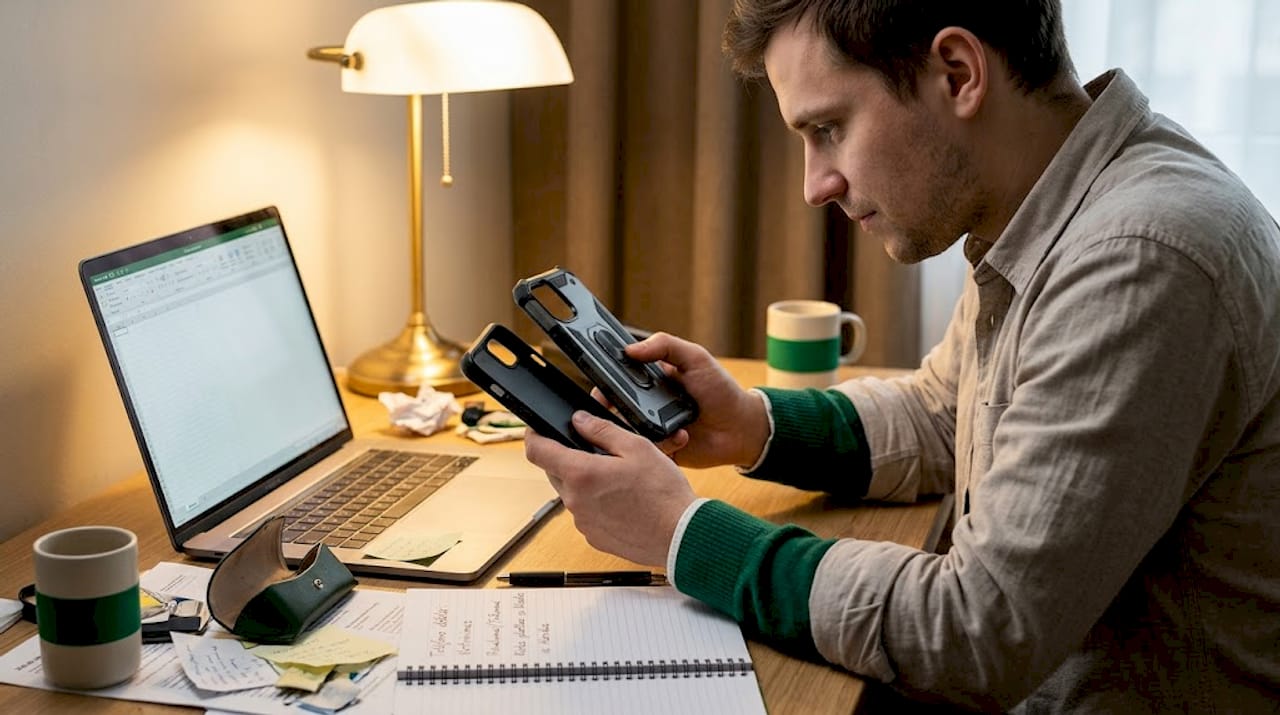
Plastic cases are rigid, thin and often very cheap. They protect well against scratches, but absorb impacts less well than silicone. Hybrid cases, also called rugged or “armor” cases, combine the best of both worlds: a hard outer layer with a soft inner one. They are one of the best options for people who work outdoors or play sport actively.
Metal and innovative cases
Metal cases offer maximum protection, but they are heavy and can interfere with wireless charging. Innovative cases include biodegradable options made from bamboo fibre, wheat bran or recycled plastic. These cases are becoming increasingly popular with eco-conscious shoppers.
Comparison table
| Case type | Protection level | Price | Durability | Extra features |
|---|---|---|---|---|
| Silicone | Medium | €5–20 | 1–2 years | Grip |
| Leather | Medium | €20–60 | 3–5 years | Pockets |
| Plastic | Low | €3–15 | 2–3 years | Slim design |
| Hybrid | High | €15–40 | 2–3 years | Kickstands, camera cover |
| Metal | Very high | €30–80 | 5+ years | Maximum protection |
| Eco-friendly | Medium | €10–35 | 1–3 years | Kind to nature |
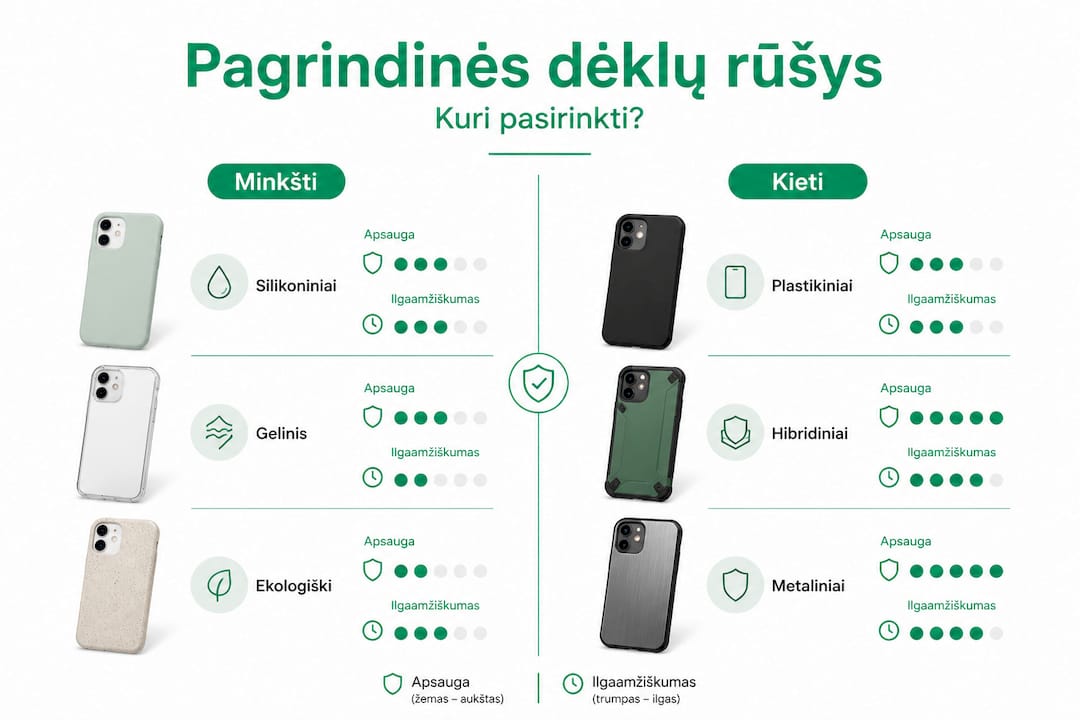
As you can see, each category has its strengths and weaknesses. There is no single universal answer to which case is best. It all depends on your needs, lifestyle and budget.
How do phone cases protect your phone?
Now that we know the types, it is important to understand their real protective value. A case is not just an aesthetic accessory. It is a genuine protection system that works for you every day.
Shock absorption and drop protection
The main job of a case is to absorb energy during a fall. When a phone is dropped, the force of the impact is spread through the case material instead of going straight into the phone's glass or body. That is why the right case often helps you avoid an expensive repair.
It is especially important that the case has raised edges around the screen and camera. These raised edges, also known as “lip” protection, stop the screen from touching the ground directly when the phone lands face down. It is a detail many people forget to check when buying a case.
Protection against scratches and everyday wear
Every day your phone goes into a pocket together with keys, coins and other items. These can scratch the phone's back cover or even the camera lens. A case acts as a barrier that protects the phone's original surface.
A single scratch on the back glass can cut a phone's resale value by 20–30%. A case protects not only the phone itself but also its value as an investment.
Protection against moisture and dirt
Although most standard cases are not fully waterproof, they protect against accidental splashes, dirt and dust. This matters especially for people who work outdoors, play sport or travel often. Special waterproof cases offer an even higher level of protection.
Additional protective features
Modern cases often have built-in camera protection. The camera is one of the most expensive parts of a phone to repair, so protecting it is especially important. An iPhone 14 Pro Max case with a raised camera frame is a great example of how even large camera systems can be protected.
Key protective benefits:
- Shock absorption during a fall
- Protection against scratches in everyday use
- Camera and lens protection
- A barrier against moisture and dirt
- Screen protection thanks to raised edges
- Preserving the phone's resale value
Pro tip: when buying a case, always check that it has raised edges to protect the camera. A lip of just 1–2 millimetres can save the camera from scratches when the phone is lying on a table.
Financial benefit
Let's do the simple maths. A good case costs €10–40. Replacing the screen on an iPhone costs €100–300, and on a Samsung €80–250. That means one case can save you 10 times more than it costs. It is one of the best investments you can make in your phone.
How do you choose the right phone case for different situations?
Now that it is clear what cases protect against, it is time to learn how to judge which one best suits your particular situation. The choice depends on many factors, and it pays to consider them systematically.
Step 1: assess your lifestyle
First, think about how you use your phone. Do you work in an office where the phone mostly sits on the desk? Do you play sport actively and take your phone with you to training? Do you travel a lot, with your phone constantly in a pocket or backpack?
Office workers are well served by slimmer, elegant cases, such as leather or thin plastic ones. People with an active lifestyle need hybrid or rugged cases with extra protection. Travellers often choose cases with card pockets so they can do without a wallet.
Step 2: check compatibility with your phone model
This seems obvious, yet many people buy universal cases that don't fit their phone precisely. An ill-fitting case may not cover all the buttons, may leave openings exposed or may even interfere with wireless charging. Always buy a case made for your specific phone model.
Silicone cases are the most popular choice for everyday use, but even when choosing silicone it is important to check that the case matches your model exactly. For example, the case for Xiaomi 14 Pro is made precisely to this model's dimensions, so all the buttons and ports are easy to reach.
Step 3: decide on the level of protection
Do you need maximum protection, or is basic protection enough? If you are someone who often drops their phone, choose cases with a higher protection rating. Many manufacturers state a drop protection rating measured in metres. The higher the number, the better the protection.
Pro tip: look for cases with MIL-STD-810G certification. This is a military standard, meaning the case has passed rigorous tests under various conditions, including drops, temperature fluctuations and humidity.
Step 4: think about design and extra features
A case is also a style accessory. It can reflect your personality or simply complement your everyday style. The market offers cases in all kinds of patterns, colours and textures. Some cases have built-in kickstands that let you stand the phone on a table and watch videos hands-free.
The iPhone 14 Max case is a good example of how a simple design can be combined with reliable protection. The most important thing is that the case meets both your practical and your aesthetic needs.
Key questions to ask before buying a case:
- Does the case fit my phone model exactly?
- Does it have raised edges around the screen and camera?
- Is the case compatible with wireless charging?
- Does it have the extra features I need (pockets, a stand)?
- Does the level of protection match my lifestyle?
- Does the price match the quality?
Cases for different situations
For travel: choose cases with card pockets and sturdier protection. When you travel, your phone faces more risks than at home.
For business: elegant leather cases or thin matte plastic cases give a professional look and sufficient protection.
For active sport: hybrid rugged cases with extra protection and grippier surfaces are the best choice.
For everyday use: silicone or gel cases are a great example of the balance between price, protection and ease of use.
Style and sustainability trends: can they be combined?
Once you know how to choose by your needs, it is worth looking at how the world of cases is changing: style and sustainability are becoming inseparable.
Design options on today's market
Today a phone case is not just a protective device but also a means of self-expression. You can find cases with botanical patterns, abstract compositions, geometric designs and even personalised photos. Clear cases let you show off the phone's original design, but be aware that they can turn yellow over time.
The choice of colours is also very wide, from classic black to vivid green or pink. Some manufacturers offer gradient colours or a metallic effect that gives the phone a luxurious look. Matte finishes are very popular because they don't show fingerprints and look elegant.
Eco-friendly cases: myth or reality?
Eco-friendly cases are a real and growing market niche. Biodegradable cases are made from natural materials such as bamboo fibre, corn starch, wheat bran or recycled plastic. These cases break down much faster than conventional plastic, reducing their impact on the environment.
A wheat bran case is a great example of how sustainability and modern design can go together. These cases are not only kind to nature but also have a unique texture that gives a good grip.
Pros of eco-friendly cases:
- Biodegradable and harmless to the environment
- Often made from renewable sources
- Unique natural textures
- Reduce the amount of plastic waste
- Protection quality that keeps improving
Cons of eco-friendly cases:
- Can be more expensive than conventional plastic cases
- Some models offer a lower level of protection
- A more limited choice of colours in some models
- A shorter lifespan than synthetic cases
How to combine responsible consumption and fashion
Responsible consumption does not mean you have to sacrifice style. More and more eco-friendly case makers are working with designers to create products that look modern while being kind to nature. You can choose an eco-friendly case with bright colours, interesting patterns or a minimalist design.
It is also worth thinking about how long a case will last. A longer-lasting case is more eco-friendly because it is replaced less often and creates less waste. From this point of view, leather or high-quality hybrid cases can be the more eco-friendly choice in the long run, even if they are made from synthetic materials.
A practical view: why is it worth investing in a good case?
Working with thousands of customers, we see the same scenario again and again: someone buys a new phone, decides to save money on the case and comes back a few months later with a cracked screen. That costs far more than a good case would have.
The most common mistake we see is choosing on looks and ignoring protection. People pick the thinnest, most elegant case because it doesn't change the shape of the phone. But a thin case often provides only minimal protection. Elegance and protection can go together, but you need to find the right balance.
Another common mistake is buying the cheapest option available. A five-euro case may look like a good deal, but if it doesn't fit your phone model exactly or is made from low-quality materials, it won't give you the protection you need. It is better to invest €15–25 in a quality case than to pay €150 for a screen replacement a year later.
We also notice that many people don't replace their case even when it is clearly worn out. A cracked, stretched or yellowing case no longer gives the same protection. A case should be replaced at least once a year, and a silicone one even more often.
One of our favourite examples is the MagSafe silicone case, which offers not only protection but also the extra functionality of the MagSafe ecosystem. It is a great example of how one case can do several jobs at once. When you invest in a case like this, you get protection, convenience and compatibility with other accessories.
Our verdict is simple: a good case is not an expense. It is an investment that will pay for itself more than once. Choose according to your needs, check compatibility and don't skimp on quality. Your phone will repay you with a longer life and retained value.
Find the right phone case with kama.lt
If you want to find the right case straight away, here is how we can help you choose faster.

Kama.lt offers a wide range of cases for all the most popular phone models. Whether you have an iPhone, Samsung, Xiaomi or another model, you will find one that fits exactly. For example, the rugged case for iPhone 15 Pro with a built-in stand and camera protection is one of our most popular picks for people with an active lifestyle. And for those looking for an elegant option for a Samsung phone, the Samsung Galaxy S24+ case is a great choice. Browse our catalogue of phone cases for every model, select your phone model and find the perfect case in a few minutes. Fast delivery across Lithuania and a convenient returns policy make shopping a pleasure.
Frequently asked questions
Does a silicone case really protect against cracked screens?
Partly. Silicone absorbs impact energy well and raised case edges stop the screen hitting the surface directly, but there is no guarantee. It is best to pair the case with a screen protector.
How long does a silicone case last?
Silicone cases usually last about 1–2 years, but they wear quickly and can turn yellow, especially clear models exposed to ultraviolet light.
How does a leather case differ from a silicone one?
Leather cases are more durable and add a touch of luxury, but they cost more and need regular care so they don't dry out.
Is an eco-friendly case worth choosing?
Eco-friendly cases are kind to nature and increasingly meet modern design standards, so they are a smart choice for anyone who cares about responsible consumption.
Do clear cases turn yellow quickly?
Yes, clear silicone cases can turn yellow over time due to ultraviolet light, so if you want your case to keep looking good for longer, choose coloured or matte-textured options.
Recommendations
Straipsnyje minimos prekės
-
-
-
Pristatymas 5-9 d.d.Regular price €2,49
-
-
-
-
Pristatymas 1-3 d.d.Regular price €2,49
-
Pristatymas 5-9 d.d.Regular price €2,49


